




Supermarket Refrigeration: Rack Systems, Display Cases and Efficiency Loss
Key takeaways
- ENERGY STAR says refrigeration may use up to 40% of a grocery store's total energy.
- EPA uses 25% a year as the industry average refrigerant leak rate; GreenChill partners run at about half that.
- Rack systems with long piping runs are prone to leaks, charge problems and uneven oil return.
- Since January 1, 2026, HFC systems with 15 lb or more of charge face a 20% leak-repair trigger for commercial refrigeration.
- EPA's May 2026 rule eased refrigerant deadlines for new supermarket systems, which changes the repair-versus-replace math for existing racks.
In a typical supermarket the refrigeration system is the single largest energy user. ENERGY STAR notes that refrigeration may use up to 40 percent of a grocery property's total energy. It is also the largest source of refrigerant emissions in food retail: EPA's GreenChill partnership has used an industry average leak rate of 25% a year since its launch in 2007. That means a store's refrigeration plant is both an energy line item and a compliance line item. This guide covers how the equipment works, where efficiency goes, how to measure it, and how to prioritize fixes.
How supermarket refrigeration works
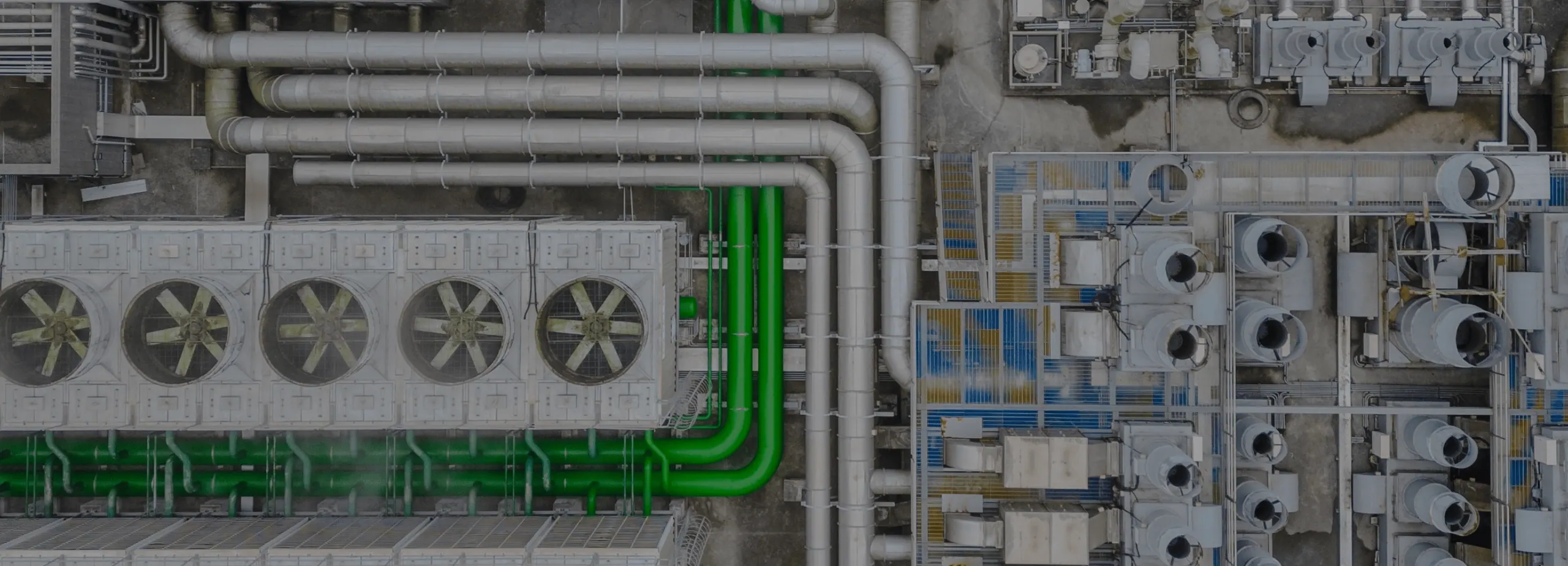
Most full-size supermarkets use a centralized rack system: several compressors mounted together in a machine room or rooftop enclosure, serving dozens of display cases and walk-ins through a network of piping. Key parts:
- Compressor racks, usually split into medium temperature (dairy, meat, produce, deli) and low temperature (frozen food, ice cream). Compressors cycle on and off to hold a suction pressure setpoint.
- Remote condenser, usually air-cooled on the roof, sometimes with heat reclaim to the store's HVAC or water heating.
- Long liquid and suction lines running to every case and walk-in. In a large store these runs can be long, with many joints, valves and branches.
- Display cases: open multi-deck cases, cases with glass doors, coffin cases and service cases, each with its own evaporator coil, fans, expansion valve, lights and often anti-sweat heaters.
- A refrigeration controller that sequences compressors, manages defrost for each circuit, and controls condenser fans.
Smaller stores and convenience formats often use self-contained cases or individual condensing units instead. EPA's GreenChill 15-year report notes that stores are increasingly shifting to self-contained equipment and smaller footprints, both of which lower refrigerant charge per store. Walk-in boxes within a store follow the same principles covered in our walk-in cooler and freezer guide.
How supermarket refrigeration loses efficiency
Refrigerant leaks and charge
Hundreds of joints, valves and vibrating components across a long piping network make leaks routine. A system that is short of charge loses capacity, runs longer, and can starve cases at the far end of a circuit. GreenChill reported that partners' average emissions rate was 12.9 percent in 2021, about half the estimated industry average of 25 percent, which shows how much difference leak management makes. In reporting year 2024, EPA counted more than 13,500 supermarket stores in the partnership, about 30% of U.S. stores.
Oil return on long runs
Compressor oil travels with the refrigerant. In a rack system it has a long way to go before it returns to the compressors, through low-velocity sections, risers and evaporators running at low temperatures where oil becomes more viscous. Rack systems use oil separators and oil management systems for this reason. Oil that stays out in the system can coat the inside of evaporator and condenser tubes and act as an insulating film. For background, see how compressor oil migrates and what oil fouling is.
Case-level losses
- Dirty case coils and blocked return-air grilles from overstocking.
- Missing or damaged night covers on open cases, and failed door gaskets on door cases.
- Anti-sweat heaters running full time instead of being controlled by humidity.
- Defrost schedules set too frequently or terminating on time instead of temperature.
- Expansion valves drifting, leaving some cases overfed and others starved.
Plant-level losses
- Dirty rooftop condenser coils and failed condenser fans, which raise head pressure.
- Head-pressure control set high year-round instead of floating down in cool weather.
- Suction pressure setpoints lowered to compensate for one problem case, penalizing the whole rack.
- Compressor wear and short cycling.
How to measure supermarket refrigeration performance
Most modern rack controllers already log much of what you need. Pull the data and look at trends:
| Metric | Where to get it | What to look for |
|---|---|---|
| Refrigerant additions by system | Service records, leak-rate calculations | Repeat additions to the same rack; annualized leak rate near 20% |
| Suction pressure and saturated suction temperature | Rack controller | Setpoint lowered over time; frequent alarms |
| Discharge (head) pressure vs. outdoor temperature | Rack controller plus a weather feed | Head pressure not dropping in cool weather; rising at the same outdoor temperature |
| Compressor run hours and starts | Rack controller | Run hours climbing without added load; short cycling |
| Case discharge-air temperature and superheat | Case controllers or spot checks | Far-end cases running warm; wide superheat swings |
| Refrigeration kWh | Submeter on the rack and condenser panel | Weather-normalized kWh trending up |
Because refrigeration load depends on store traffic, restocking and outdoor conditions, compare like with like: same season, similar weather, same store hours. Our guide to baselines and weather normalization explains how.
Maintenance that matters
- Leak detection and repair. Since January 1, 2026, EPA's AIM Act rule requires owners of appliances with 15 pounds or more of HFC-containing refrigerant to calculate a leak rate every time refrigerant is added. For commercial refrigeration the repair trigger is 20% a year, with repairs due within 30 days. Commercial refrigeration systems over the threshold with 500 pounds or more of charge need quarterly leak inspections until four consecutive quarters show the leak rate is under control. Appliances that leak 125% or more of their full charge in a calendar year must be reported to EPA by March 1 of the next year.
- Condenser maintenance. Clean rooftop coils, verify every fan works, and confirm head-pressure control lets pressure float down when weather allows.
- Case maintenance. Clean coils and drain pans, clear return grilles, enforce load lines, repair night covers and door gaskets, verify anti-sweat controls.
- Defrost tuning. Review the number and length of defrosts per circuit and how each terminates.
- Oil management. Check oil separator and oil level regulator operation, and trend oil additions to each compressor. Frequent oil additions can signal oil stranded in the system.
- Controller setpoints. Restore suction and head-pressure setpoints to design after fixing the problem that caused someone to change them.
ENERGY STAR's grocery guidance adds simple operating habits: keep doors closed, check temperature settings regularly, clean coils, and fix door seals that do not close tightly.
Refrigerant rules that affect the plan (as of October 2026)
EPA's Technology Transitions rule limits the global warming potential (GWP) of refrigerants allowed in new systems. On May 21, 2026, EPA finalized changes that, according to its fact sheet:
- Set the GWP limit for new supermarket systems at 1,400 starting January 1, 2027, until January 1, 2032, after which the stricter 150 or 300 limits apply depending on charge size and configuration.
- Apply a similar 1,400 limit to new remote condensing units until January 1, 2032.
- Allow existing supermarket systems to increase cooling capacity by up to 15% without being treated as a new system.
EPA also states that these rules do not limit the use of existing systems, and that you can keep repairing existing refrigeration equipment, including replacing major components such as a compressor or condensing unit. The phasedown of HFC supply continues regardless, and EPA notes the availability of HFCs may lessen over time. For how this affects decisions on aging racks, see the HFC phasedown and existing equipment. Rules in this area have changed several times since 2023; confirm current requirements with EPA or counsel before committing to a plan.
Where an internal oil-film treatment fits, and where it does not
Supermarket racks are a natural candidate to consider for oil-film treatment for one reason: long piping and many low-temperature evaporators give oil more places to settle. But it is one measure among many, and it is not the first one.
CryogenX4 says its one-time treatment is installed while the system runs, with no downtime, and, according to the company, it lifts oil film from internal heat-exchange surfaces, returns it to the compressor sump, and improves the lubricity of the existing oil. The company reports savings of up to 30%, with a typical payback of 12 to 36 months on the treatment; results vary by equipment condition. The company states that Intertek tested and certified its compatibility with all refrigerants and refrigerant oils.
Reasonable to evaluate when:
- Leaks are under control, case and condenser maintenance is current, and refrigeration kWh is still drifting up on a weather-normalized basis.
- You operate many similar stores and can treat one or two racks as a measured pilot while others serve as controls.
- You plan to keep an existing rack running for years rather than replace it soon, which the 2026 rule changes may make more attractive.
Not the right tool when:
- The rack is leaking above the EPA threshold. Leak repair is a legal obligation and comes first.
- Losses are at the case level: night covers, gaskets, overstocking, defrost.
- The store is scheduled for a refrigeration replacement within a year or two.
- You have no submetering and no way to normalize for weather and sales activity.
For how a pilot is structured and what gets measured, see what a CryogenX4 pilot measures.
Questions to ask your refrigeration contractor
- What was each rack's annualized leak rate over the last three years, and which components leak most?
- How much oil has been added to each compressor in the last year?
- Does head pressure float with outdoor temperature, and what is the minimum setpoint?
- Have suction setpoints been changed from design, and why?
- Which circuits have the most defrost alarms or warm-case complaints?
- Is the rack refrigeration panel submetered? If not, what would it take?
Next step
Pull one year of leak and oil-addition records and controller trends for your highest-energy store. If leaks are under control and the plant is still drifting, read our grocery industry guide and talk to CryogenX4 about a measured pilot on one rack.
Frequently asked questions
What is EPA GreenChill?
GreenChill is a voluntary EPA partnership launched in 2007 that works with food retailers to reduce refrigerant emissions, lower charge sizes, and adopt advanced refrigeration. It offers corporate partnership, store certification and benchmarking against other partners.
Does the 2026 leak-repair rule apply to supermarket racks?
Usually yes. It applies to appliances with 15 pounds or more of HFC-containing refrigerant, and most rack systems hold far more than that. The repair trigger for commercial refrigeration is a 20% annual leak rate.
Do I have to replace my HFC rack because of the AIM Act?
No. EPA states that the rules do not limit the use of existing systems and that you can continue to repair them, including replacing compressors or condensing units. The restrictions apply to new systems, with deadlines EPA revised in May 2026.
Why do far-end cases run warm?
Common causes include low refrigerant charge, a starved or misadjusted expansion valve, dirty case coils, blocked airflow, long or undersized suction lines, and oil logging in low-temperature evaporators. A technician should check superheat at the case.
Sources
- Energy Savings Tips for Small Businesses: Grocery Stores — ENERGY STAR (U.S. EPA)
- About GreenChill — U.S. Environmental Protection Agency
- EPA's GreenChill Program Recognizes Top Supermarket Industry Partners for Outstanding Practices — U.S. Environmental Protection Agency
- GreenChill: Keeping Cool for Fifteen Years (2022) — U.S. Environmental Protection Agency
- AIM Act Fact Sheet: Leak Repair Requirements for Appliances Containing HFCs and Certain Substitutes (January 2026) — U.S. Environmental Protection Agency
- Fact Sheet: Final Rule - Reconsideration of Certain Technology Transitions Requirements (May 2026) — U.S. Environmental Protection Agency
- Frequent Questions on the Phasedown of Hydrofluorocarbons — U.S. Environmental Protection Agency
Keep reading
Walk-In Coolers and Freezers: How They Lose Efficiency and What to Do About It
How walk-in boxes and their refrigeration systems work, what erodes their efficiency over time, how to measure it, and which fixes belong in which order.
Read the guide →EvaluateRefrigeration and HVAC Efficiency for Grocery Stores and Supermarkets
Refrigeration is the biggest energy load in a supermarket. How it breaks down, what EPA rules and GreenChill mean, where efficiency is lost, and how to pilot savings.
Read the guide →LearnHow Compressor Oil Migrates Through an HVAC-R System
Oil leaves the compressor with the refrigerant on every cycle. How it circulates, where it gets stuck, why off-cycle migration matters, and what to ask your technician.
Read the guide →EvaluateThe HFC Phasedown and Your Existing HVAC-R Equipment: 2026 Rules and Dates
The AIM Act phasedown schedule, current Technology Transitions dates after EPA's May 2026 revisions, and why keeping existing R-410A and HFC equipment efficient matters.
Read the guide →DecideWhat a CryogenX4 Pilot Measures
The data points, sensor list, timeline and comparison method CryogenX4 describes for verifying results on your own HVAC-R equipment.
Read the guide →How CryogenX4 Works
How the treatment removes oil film and improves heat transfer.
Read the guide →See what your equipment could save
CryogenX4 is a one-time treatment installed while your system runs. Start with a pilot on a few units, measured against a baseline, before you commit to a building or a portfolio.