




Ammonia (NH3) Refrigeration: Efficiency, Oil Management and Safety Context
Key takeaways
- DOE says more than 90% of U.S. industrial refrigeration uses ammonia-based mechanical systems.
- In ammonia systems, oil collects on the low-pressure side and must be removed; IIAR 9 requires provisions for it.
- DOE's top measures: lower condensing pressure, better compressor sequencing, variable speed, and reducing system lift.
- IIAR 9 required an initial safety evaluation of existing systems by January 1, 2026, revalidated at least every five years.
- Any change to chemicals or equipment in a PSM-covered ammonia process needs a management-of-change review.
Ammonia (R-717) is the dominant refrigerant in industrial cold chains: food and beverage processing, cold storage warehouses, dairies, breweries, meat and poultry plants, and ice rinks. According to the U.S. Department of Energy's Better Plants program, more than 90% of industrial refrigeration in the United States is provided by mechanical systems using ammonia, and process cooling and industrial refrigeration together account for roughly 5.7% of U.S. industrial energy use. Ammonia is thermodynamically efficient, but large plants run around the clock and drift out of tune in ways that are easy to miss. This guide covers how these systems work, where efficiency goes, how to measure it, and how safety rules shape any change.
How an industrial ammonia system works
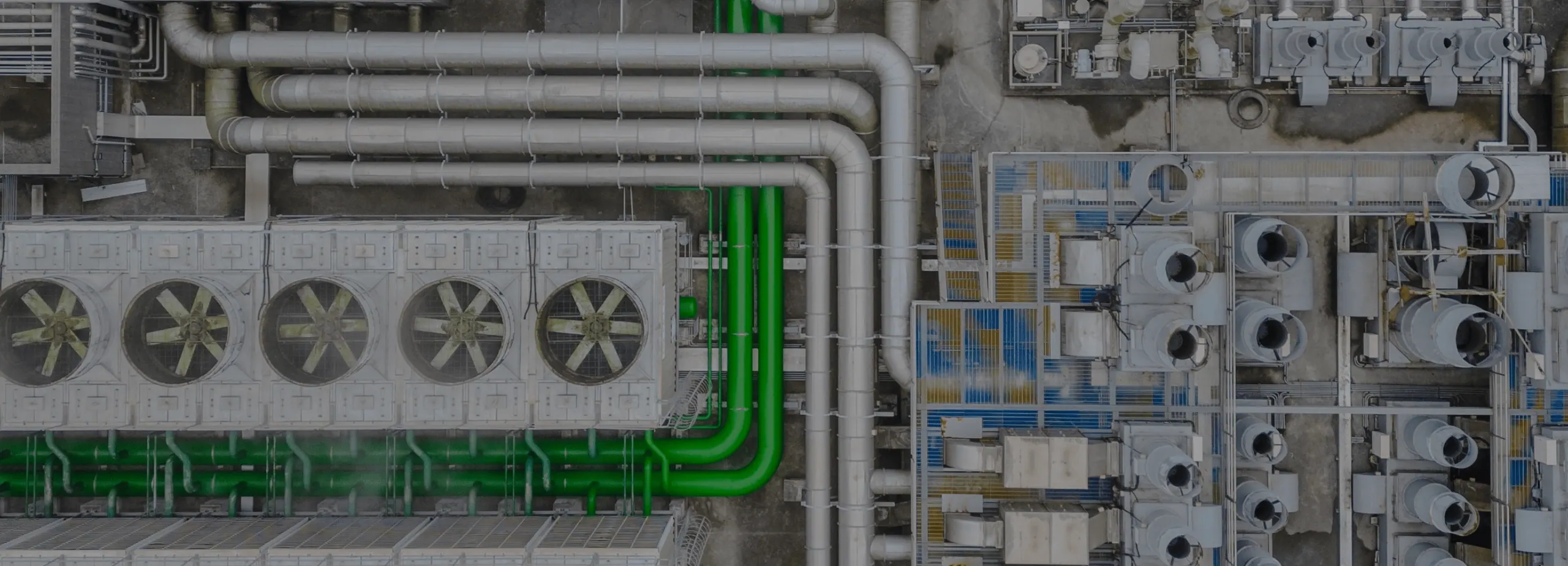
Industrial ammonia plants are built from field-assembled components rather than packaged units:
- Compressors, most often oil-flooded screw compressors, sometimes reciprocating, often in two stages for low-temperature freezing.
- Oil separators on each compressor discharge that remove most, but not all, oil from the hot gas.
- Evaporative condensers on the roof that reject heat using water spray and fans.
- A high-pressure receiver holding liquid ammonia.
- Evaporators: air units in freezers and coolers, plate freezers, spiral freezers, shell-and-tube or plate heat exchangers chilling glycol or process water. Many are fed by a recirculator (low-pressure receiver) that pumps excess liquid through the evaporators (overfeed systems).
- Controls that sequence compressors and condensers and manage defrost.
Why oil behaves differently in ammonia systems
In most HFC systems the oil mixes with the refrigerant and travels around with it. In typical ammonia systems using mineral or similar oils, the oil does not mix well with liquid ammonia, is heavier than it, and does not boil off in the evaporator. The result is that oil that escapes the separators tends to collect at low points on the cold, low-pressure side of the plant. The IIAR 9 checklist notes that oil accumulates on the low-pressure side and that drain points are commonly located on oil pots and low-pressure vessels. The UK Institute of Refrigeration puts it plainly: oil management on the low-pressure side of ammonia systems is necessary to keep the evaporators in good working order and to maintain system efficiency.
Oil that coats evaporator surfaces or pools in vessels adds a layer of resistance to heat transfer, so the plant has to run a lower suction pressure to get the same cooling. Every degree of lower suction temperature increases compressor work. Background on the general mechanism is in what is oil fouling.
How ammonia plant efficiency degrades
- High condensing pressure. Scaled or fouled evaporative condenser tubes, poor water treatment, failed fans or pumps, and non-condensable gases (air) in the system all raise head pressure. IIAR 9 requires a means to remove air and other non-condensables.
- Fixed head-pressure setpoints. Plants often hold a high minimum condensing pressure all year, even when cool weather would allow lower pressure.
- Low suction pressure. Operators lower suction setpoints to compensate for one struggling room or freezer, which penalizes every compressor on that suction level.
- Oil logging. Evaporators and vessels accumulating oil faster than it is drained.
- Poor compressor sequencing. Several screw compressors running at part load instead of fewer running near full load. Screw compressors with slide-valve unloading lose efficiency at low load.
- Defrost inefficiency. Too many hot-gas defrosts, or defrosts that run long.
- Envelope and door losses in freezers and docks, which add both sensible and frost load.
DOE Better Plants lists its top five efficiency measures for refrigeration systems as: minimize the condensing pressure setpoint; revise compressor and condenser control to sequence the most efficient combinations; add variable speed control on evaporator fans and compressor motors; reduce system lift by raising suction or lowering discharge pressure; and apply floating head-pressure control with an oversized evaporative condenser. Notice that most of these are controls and operating changes, not new equipment.
How to measure ammonia plant performance
| Measurement | Why it matters |
|---|---|
| Suction pressure at each level, as saturated temperature | Shows the lift the compressors work against; compare with room and product temperature requirements |
| Condensing pressure vs. outdoor wet-bulb temperature | Evaporative condensers respond to wet bulb; a widening gap points to fouling, non-condensables or fan/pump problems |
| Compressor kW and slide-valve position (or capacity %) | Reveals part-load operation and sequencing waste |
| Plant kW per ton of refrigeration | The overall efficiency number to trend; see kW per ton explained |
| Oil added to compressors and oil drained from the low side, by date | The oil balance; rising additions or large drains suggest carryover or logging |
| Evaporator approach (room or fluid temperature minus evaporating temperature) | A widening approach at similar load points to coil fouling, oil or ice |
| Oil analysis results | Oil condition, contamination and wear metals; IIAR 9 requires a means to sample compressor oil where the manufacturer calls for periodic analysis |
Most plants with a modern control system already trend the pressures. Adding power metering on compressors and condensers lets you compute kW per ton and follow an IPMVP-based approach to verify savings; see how HVAC energy savings are measured.
Maintenance that matters
- Evaporative condenser care: water treatment, scale and biological control, spray nozzles, fan and pump operation.
- Purge non-condensables with a working automatic purger.
- Oil management: drain oil from the low side on a documented schedule, using the arrangements IIAR 9 permits (a rigid-piped oil return system, a vessel with a shut-off valve in series with a self-closing valve, or a drain-point assembly with a shut-off valve in series with a self-closing valve). Track quantities.
- Control tuning: floating head pressure, suction setpoints matched to actual needs, compressor sequencing.
- Defrost optimization on air units.
- Inspection, testing and maintenance per IIAR's standards and your PSM mechanical integrity program.
Safety and regulatory context
Ammonia is toxic and, in some concentrations, flammable. OSHA describes it as a high health hazard because it is corrosive to the skin, eyes and lungs. Several frameworks apply:
- OSHA Process Safety Management (29 CFR 1910.119) covers processes with 10,000 pounds or more of anhydrous ammonia. Among its requirements, the management-of-change provision requires written procedures to manage changes (except replacements in kind) to process chemicals, technology, equipment and procedures.
- IIAR 9, the standard for minimum safety requirements for existing closed-circuit ammonia refrigeration systems, required an initial safety evaluation of each system no later than January 1, 2026, with revalidation at least every five years. If your facility has not completed one, that is a priority well above any efficiency project.
- EPA's AIM Act leak-repair rule does not apply, because it covers HFCs and substitutes with a GWP above 53, and ammonia is neither. Ammonia plants are governed by safety rules instead. The 2026 Technology Transitions changes did raise the GWP limit for new HFC-based cold storage warehouse systems to 700 until January 1, 2032, which matters if you are comparing an ammonia expansion with an HFC alternative.
Where an internal oil-film treatment fits, and where it does not
CryogenX4 states that its technology is designed to improve efficiency in all types of HVAC-R and refrigeration systems, including ammonia refrigeration. According to the company, the treatment is a one-time application installed while the system runs, lifts oil film from internal surfaces and returns it to the sump, conditions the metal for better heat transfer, and improves the lubricity of the existing oil. The company reports energy savings of up to 30% and typical payback of 12 to 36 months; results vary by equipment condition. The company states that Intertek tested and certified compatibility with all refrigerants and refrigerant oils.
In an ammonia plant, think about it this way:
- It does not replace oil draining. Ammonia systems collect oil in pots and vessels by design. Your oil management program and IIAR 9 provisions stay in place. Ask the vendor specifically how released oil is expected to travel in your plant and whether drain frequency should increase temporarily after treatment.
- It goes through management of change. If your plant is PSM-covered, introducing a chemical into the process is the kind of change your MOC procedure exists for. Ask for safety data sheets, compatibility documentation for your specific oil type, and the vendor's injection procedure so your process safety team can review them.
- It comes after the controls work. Condensing pressure, suction setpoints and sequencing are often the largest and cheapest wins. Do them first so they do not muddy the results.
- Start with one system or suction level. Measure kW per ton, suction and condensing pressures, and evaporator approach before and after, at comparable load and weather.
Questions to ask
- Has the IIAR 9 minimum system safety evaluation been completed, and are gaps closed?
- How much oil is added to compressors and drained from the low side each month, and from which vessels?
- Does condensing pressure float with wet-bulb temperature? What is the minimum setpoint and why?
- Are suction setpoints at design, or lowered for a problem area?
- Is there power metering on compressors and condensers to calculate kW per ton?
- For any treatment or additive: what is the MOC package (SDS, compatibility data, procedure), and how will results be verified?
Next step
Start with your plant's oil balance and a week of suction, condensing and compressor power data. If the controls are tuned and the oil program is sound, contact CryogenX4 with your system details to discuss whether a measured trial on one system is appropriate. Facilities in food processing and cold storage may also find our cold storage and warehouse guide useful.
Frequently asked questions
Why does oil collect in ammonia evaporators?
Typical ammonia compressor oils do not mix well with liquid ammonia, are heavier than it, and do not evaporate. Oil that passes the separators settles at low points on the cold side, which is why ammonia plants have oil pots and drain points.
What was the IIAR 9 deadline?
IIAR 9 required an initial minimum system safety evaluation of each existing ammonia system no later than January 1, 2026, with revalidation at least every five years.
Does the EPA HFC leak-repair rule apply to ammonia systems?
No. That rule covers HFCs and certain substitutes with a GWP above 53. Ammonia systems fall under safety rules such as OSHA PSM (where the 10,000-pound threshold is met) and industry standards from IIAR.
Is a treatment injection a management-of-change item?
In a PSM-covered process, OSHA requires written procedures to manage changes to process chemicals, technology, equipment and procedures, except replacements in kind. Your process safety team should review any introduced chemical under that procedure.
Sources
- Industrial Refrigeration — U.S. DOE Better Buildings & Better Plants
- IIAR 9 Minimum System Safety Evaluation Checklist — International Institute of All-Natural Refrigeration (IIAR)
- IIAR 9 Certificate Program — International Institute of All-Natural Refrigeration (IIAR)
- New guidance note on draining oil on ammonia — Institute of Refrigeration (UK)
- Ammonia Refrigeration — U.S. Occupational Safety and Health Administration
- 29 CFR 1910.119 - Process safety management of highly hazardous chemicals — U.S. Occupational Safety and Health Administration
- 29 CFR 1910.119 Appendix A - List of Highly Hazardous Chemicals — U.S. Occupational Safety and Health Administration
- AIM Act Fact Sheet: Leak Repair Requirements for Appliances Containing HFCs and Certain Substitutes (January 2026) — U.S. Environmental Protection Agency
- Fact Sheet: Final Rule - Reconsideration of Certain Technology Transitions Requirements (May 2026) — U.S. Environmental Protection Agency
Keep reading
What Is Oil Fouling in HVAC-R Systems?
Compressor oil that settles inside coils and piping adds thermal and flow resistance. What oil fouling is, what lab research measures, how it differs from dirty coils, and what you can do.
Read the guide →EvaluateHVAC-R Efficiency for Cold Storage and Warehouses
Why refrigerated warehouses are so electricity-intensive, where refrigeration efficiency leaks away, and how to pilot an improvement without risking product.
Read the guide →EvaluateProcess Chillers: Efficiency in Plastics, Food and Manufacturing
How process chillers differ from comfort chillers, why their losses cost more, how to measure them, and where an internal oil-film treatment fits.
Read the guide →EvaluateCompatibility and Safety: Refrigerants, Oils, Seals and A2Ls
What compatibility really means, how it is tested, what changes with A2L refrigerants and 2026 EPA rules, and a checklist before treating any system.
Read the guide →Industrial HVAC-R
CryogenX4 for industrial facilities.
Read the guide →How CryogenX4 Works
How the treatment removes oil film and improves heat transfer.
Read the guide →See what your equipment could save
CryogenX4 is a one-time treatment installed while your system runs. Start with a pilot on a few units, measured against a baseline, before you commit to a building or a portfolio.